
MENU

For custom doors, Rockwood gives builders and homeowners more than a choice of wood species, panel style, and stain color from a catalog. We build doors envisioned by architects, builders, and designers to meet the specific needs of each project and client.
While wood species, panel layout, and finish are all flexible, these features are only the beginning of what Rockwood offers. Doors can be built to blend into the wall or millwork, slide into a shaped opening, or become a focal point through material and design.
Here are a few examples of the ways we help customers achieve their vision.
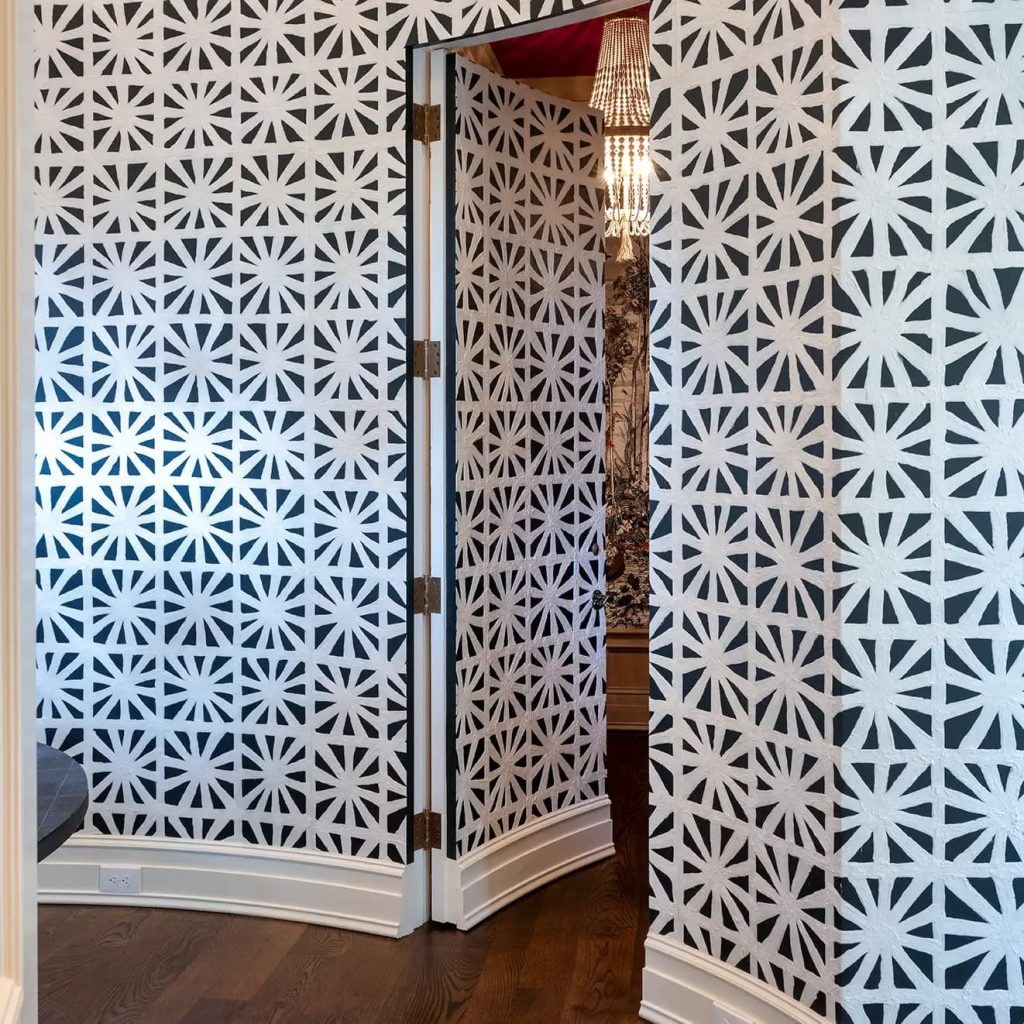
A jib door is built to blend in and disguise an opening. It sits flush to the wall and can be finished with the same paint, paneling, or wallpaper as the surrounding surface. When closed, it looks like part of the wall, with no obvious casing or frame, and may use hidden hardware.
Clients use jib doors for various reasons. Sometimes a normal door would disrupt the flow of a room. Other times, the goal is concealment. Rockwood has built jib doors for staff pantry entrances, safe rooms, and hidden storage.
A jib door may need a curved face, concealed hinges, a touch latch, or a lock. The approach and details vary with the conditions and what the client wants to accomplish.
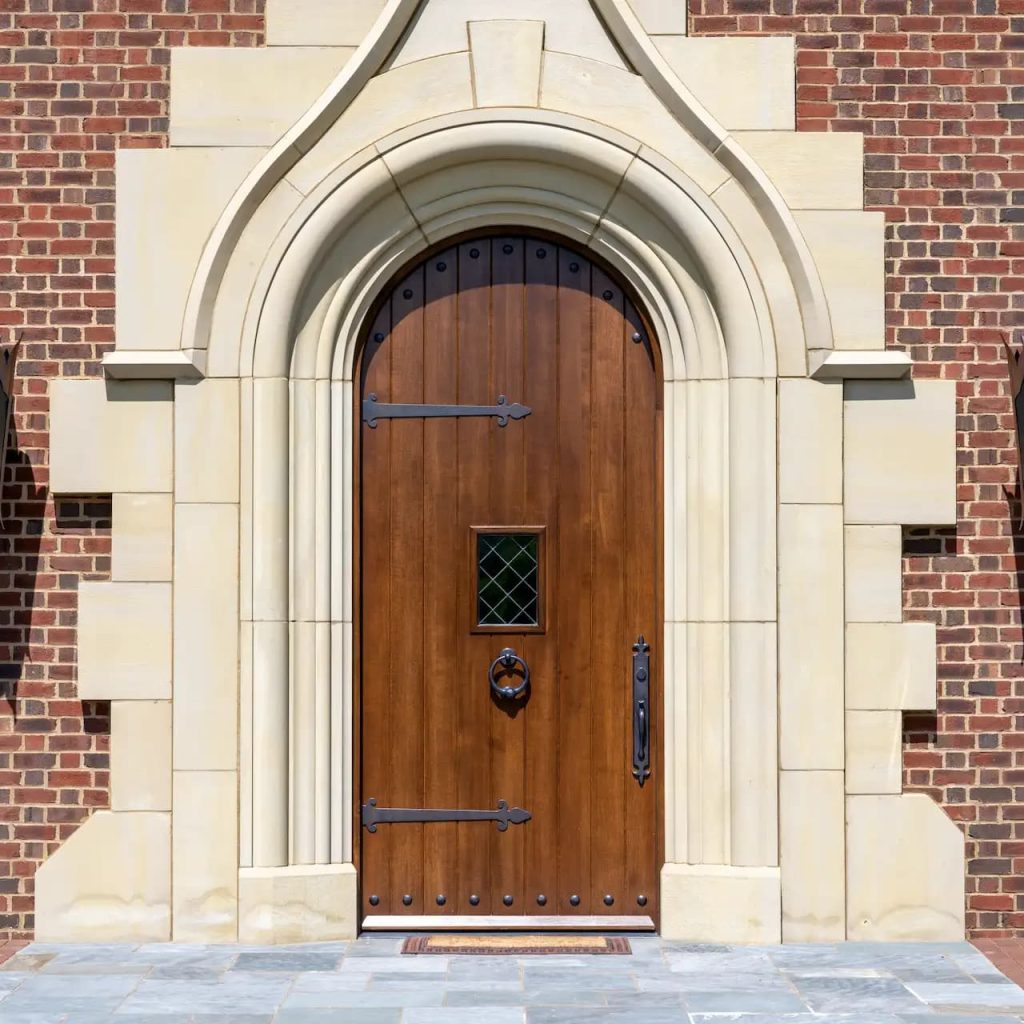
For this type of opening, a rectangular door with a curved design slides into a curved jamb to create the appearance of an arched door. Getting that effect right depends on early planning. The opening, frame, trim, wall depth, and door thickness all have to work together to maintain the look.
Because a pivot door turns from a point at the top and bottom, instead of hanging from hinges on the side, it allows large doors to move with more control.
Standard hinges have limits. A tall, wide, or heavy door can sag or bind when the hardware is asked to carry too much. A pivot system can support these doors, which makes it useful for special interior and exterior openings where the design calls for an oversized or extra-heavy door.
Harmon doors are a type of jib door that swing on special hinges called Harmon hinges, or pocket pivot hinges. They function like a normal door when used to close an opening. But when open, they swing flush into a pocket in the wall or millwork, allowing them to blend in and leave the doorway completely unobstructed.
Harmon doors can be a good choice when an opening needs to close, but the client wants the door to swing cleanly out of the way and look like part of a paneled cased opening or millwork.
Rockwood’s custom work covers a wide range of customer needs, from architect-designed doors to historic replication, and from bullet-resistant doors to slide-out dog gates.
In every case, we try to understand what the client wants to accomplish, then work through the details together so the final piece helps create the desired outcome.
Whatever your project requires, bring your idea to Rockwood early. Help us understand what the space needs to do and how you want the door to fit in. From there, we can work through the conditions, constraints, hardware, materials, and function that will make your vision work.
At Rockwood Door, we listen first, ask questions, and then create custom pieces that fit your needs. Ready to get started?